What you'll learn
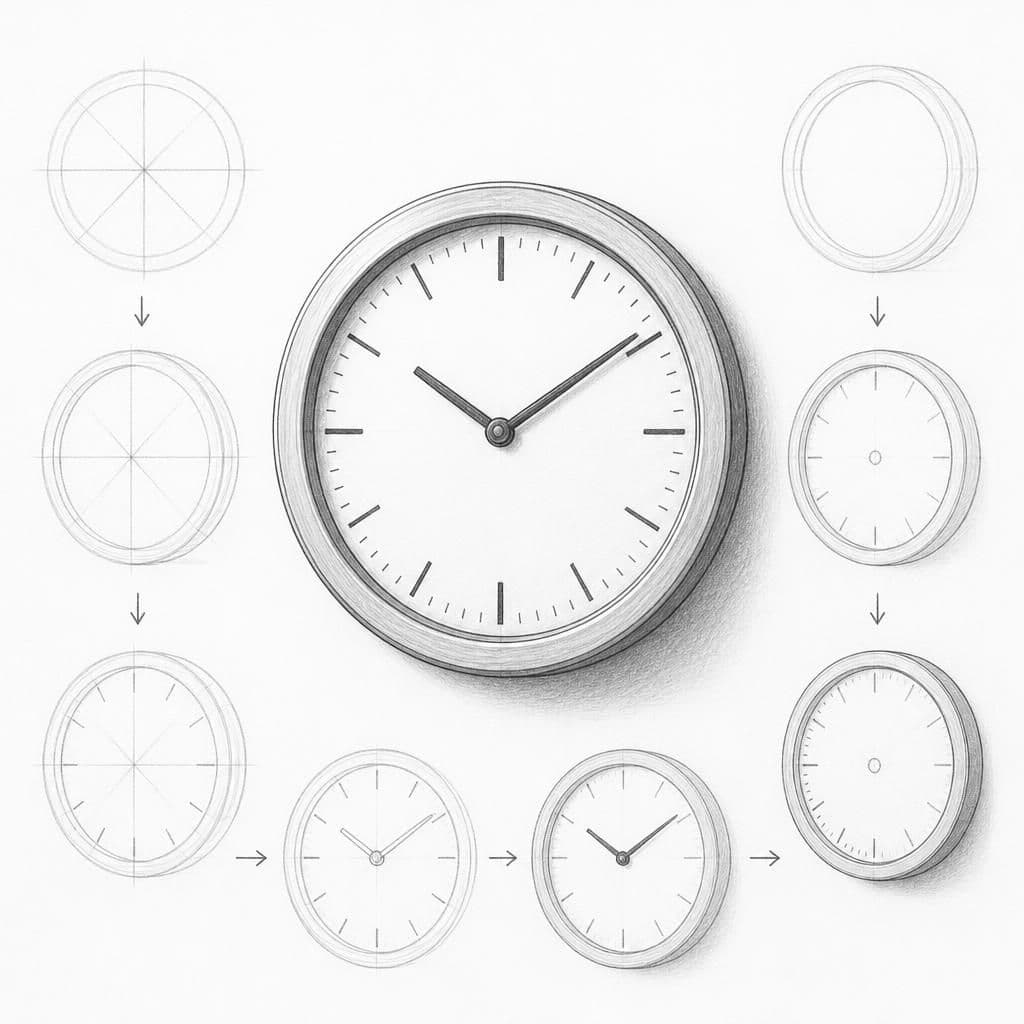
A wall clock presents an opportunity to explore line weight variation. The mix of straight edges, circular shapes, and detailed hands helps refine an artist's ability to convey depth and emphasis through line quality.
What you'll need
Step-by-step: how to draw wall clock
Begin by sketching a light outline of the clock's outer edge to establish the overall shape.
Add the clock face with its numbers or markings using consistent light lines.
Draw the clock hands in a way that highlights their structure and positioning, adjusting line weight for emphasis.
Focus on the edge and surface details, like the frame or glass cover, using varied line weights to suggest depth.
Refine the drawing by adjusting any lines that need more or less emphasis and clean up any unnecessary marks.
Before you start: what to look at
Observe how the light affects the clock's surface and edges. Note the texture of the clock face and how the hands cast subtle shadows. Focus on the accuracy and regularity of the circular shapes, like the rim and face.
Pro tips for drawing wall clock
Common mistakes drawing wall clock
Self-evaluation checklist
Check if the line weight convincingly implies depth and hierarchy. Lines should guide the viewer's eye across the structure of the clock without becoming distracting.
Frequently asked questions
How do I ensure the numbers are proportionate on the clock face?
Lightly sketch a grid or use guidelines to space the numbers evenly before committing to darker lines.
Should I draw every detail on the clock hands?
Focus on the overall shape and key characteristics. Suggest details with minimal lines for a balanced look.
How can I make the circular shape of the clock more accurate?
Use a light hand and a pivot method (like drawing with your wrist as a pivot point) to create smoother, more controlled circular lines.
More drawing lessons


Get a new drawing lesson delivered to your inbox every morning, free.
Subscribe to Draw Daily →