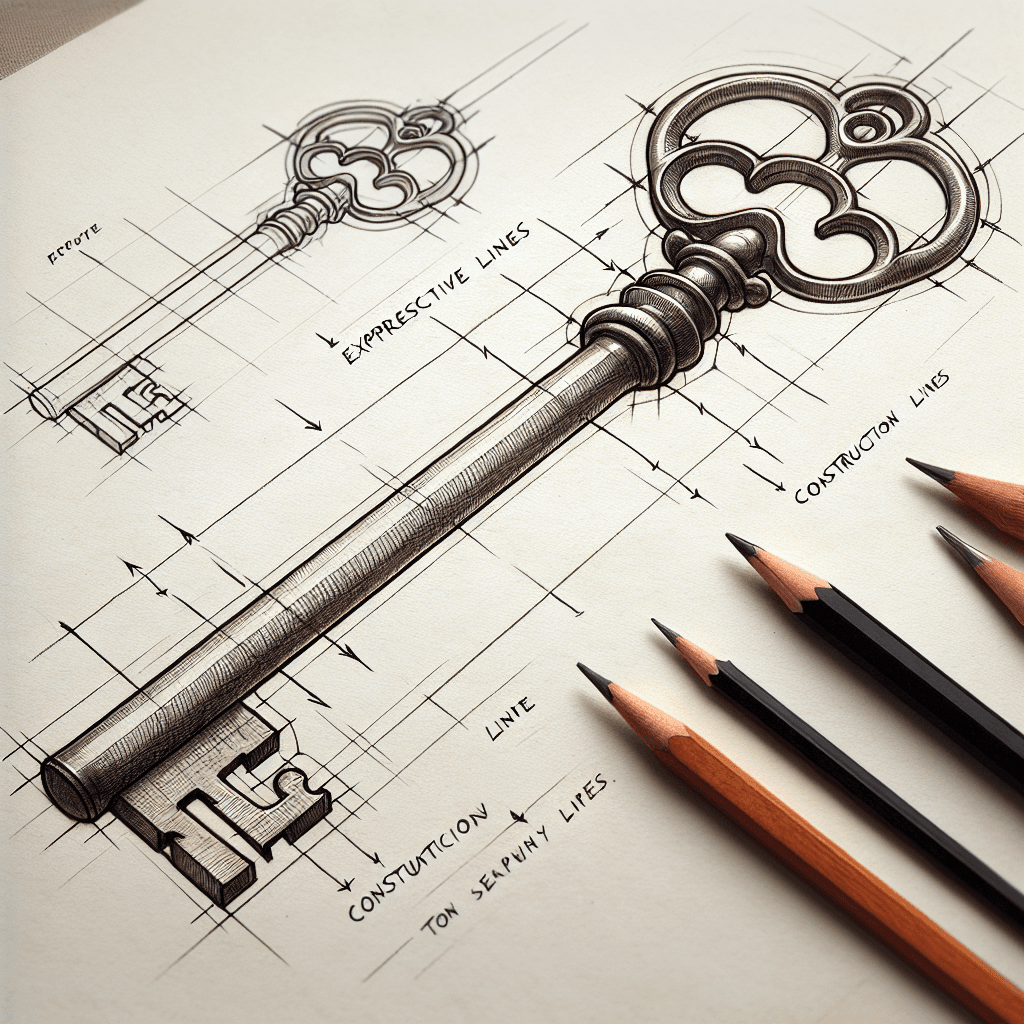
What you'll learn
A vintage key provides an opportunity to explore varying line weight and flow, emphasizing the intricate details and contours. This exercise challenges you to convey texture, depth, and intrigue through your line work.
What you'll need
Step-by-step: how to draw vintage key
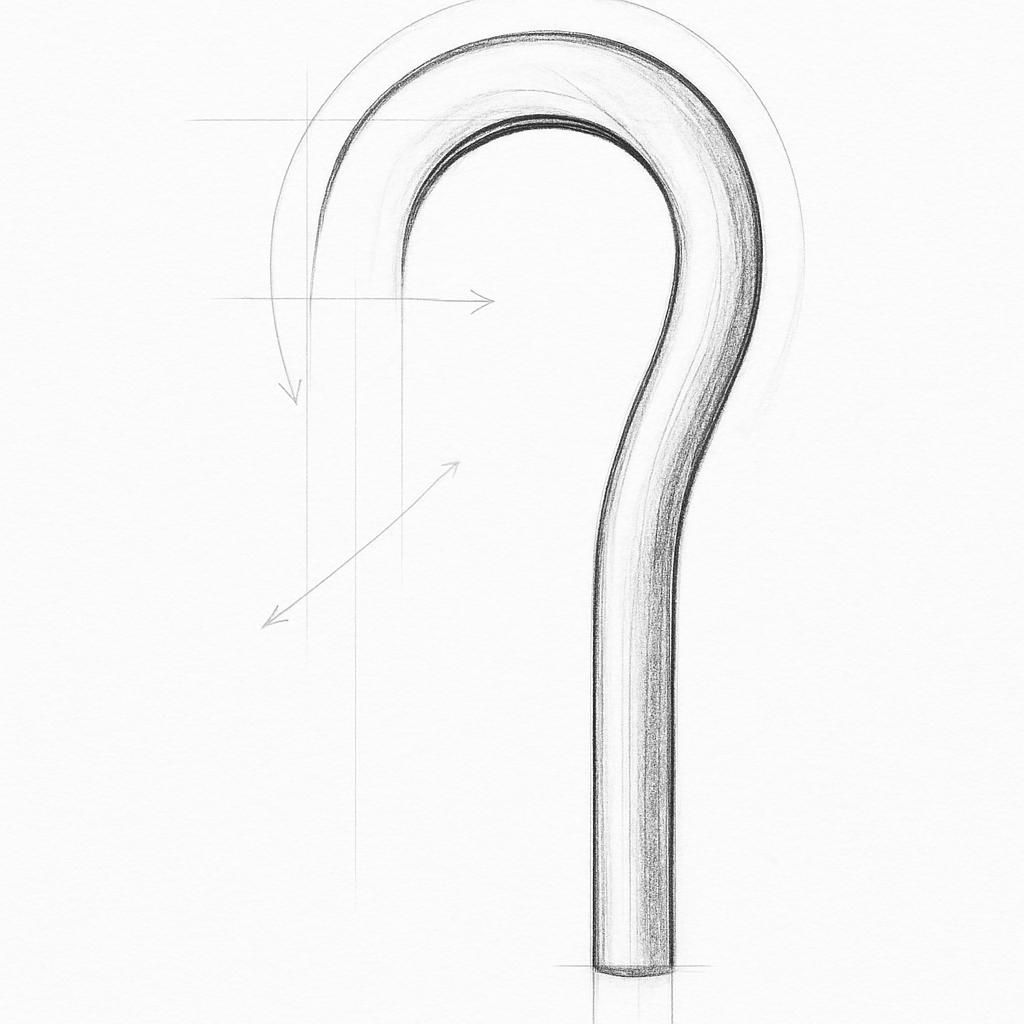
Study the vintage key, noting areas of varying thickness and unique contours.
Begin by sketching a basic outline of the key using light and consistent lines.
Gradually build up line weight, varying pressure to emphasize the key's ornate details.
Focus on highlighting the key's texture and curves, using expressive line variation.
Add final touches, ensuring that each line contributes to a cohesive and engaging depiction.
Before you start: what to look at
Before drawing, closely examine the key's bow (the circular or oval part you hold) for unique curves and openings. Observe how light creates highlights and shadows along the shaft and wards, emphasizing their proportions and details. Pay attention to any ornate engravings or textures which can add depth and character to your drawing.
Pro tips for drawing vintage key
Common mistakes drawing vintage key
Self-evaluation checklist
Assess your sketch by observing the clarity and expressiveness of your lines. Check if the line weights emphasize the key's details and if the overall drawing captures the intricate design of the vintage key.
Frequently asked questions
How do I accurately capture the intricate details of the vintage key?
Start by lightly sketching the overall shape to ensure proper proportions. Focus on each section separately, using varied line weights to emphasize detail. Break down complex patterns into simpler lines, building up gradually.
What is the best way to represent metallic textures in pencil?
Metallic textures can be conveyed by capturing the light and shadow contrasts. Use smooth, gradual shading and highlight sharp edges with lighter lines to mimic the reflective quality of metal.
How should I approach drawing the key from a challenging perspective?
Begin with a basic 3D form sketch, considering vanishing points and angles. Use overlapping lines and foreshortening to create depth. Adjust line weight to enhance the sense of perspective and dimension.
More drawing lessons


Get a new drawing lesson delivered to your inbox every morning, free.
Subscribe to Draw Daily →