What you'll learn
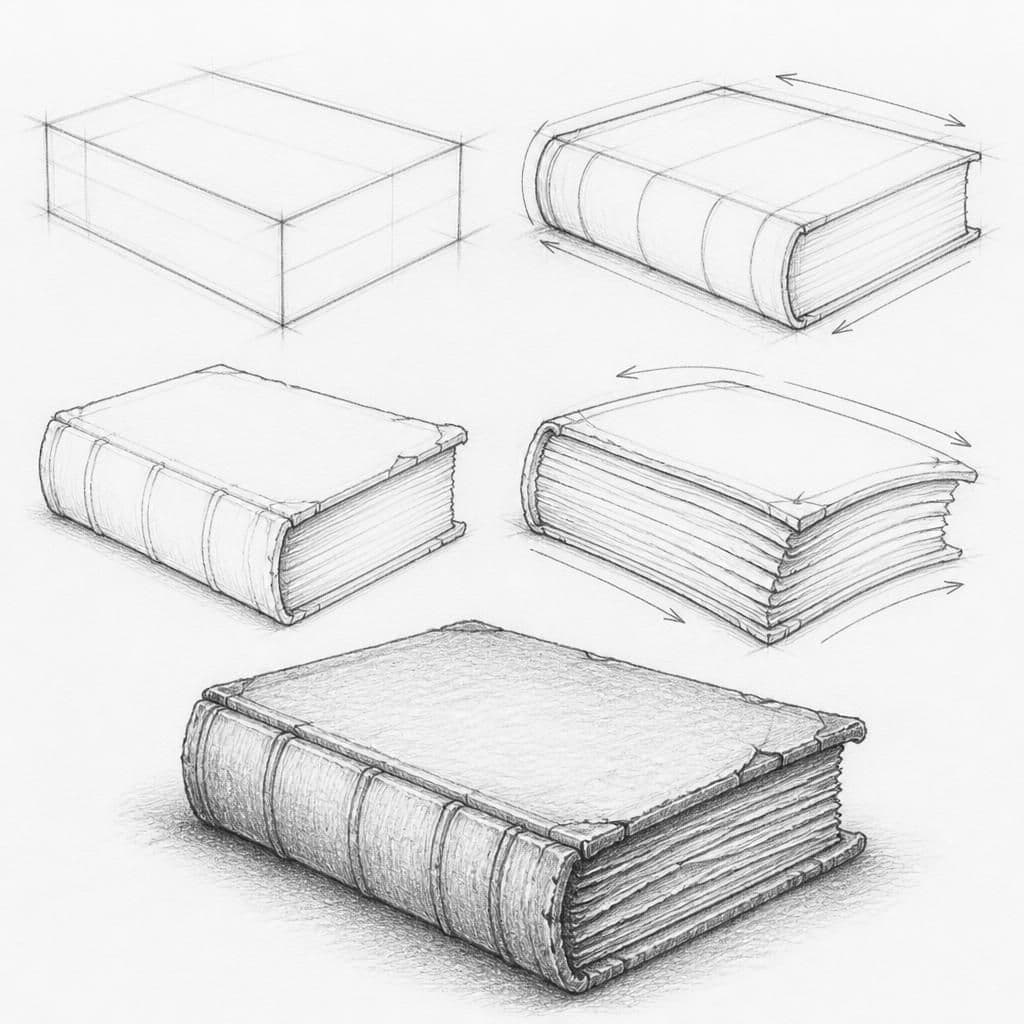
An old book offers a range of textures and shapes that challenge the artist to capture intricate details through line work. The worn surface and varying thickness of pages allow for exploration of contour lines, improving control and expressiveness.
What you'll need
Step-by-step: how to draw old book
Start by observing the book carefully. Take note of its overall shape, the texture of the cover, and the edges of the pages.
Sketch the outline of the book lightly. Focus on the general proportions and angles, keeping lines fluid and confident.
Begin adding contour lines to define the spine and cover of the book. Vary the pressure of your pencil to create different line weights.
Move on to the pages. Use fine lines to depict the individual sheets and their edges, paying attention to any bends or curls.
Enhance areas of detail, such as the texture of the cover and the spine ridges, using denser contour lines for shadow and depth.
Review your drawing, adding final touches to any areas that need more definition or contrast. Ensure the line work is expressive and dynamic.
Before you start: what to look at
Examine the spine's curve and how it interacts with light, especially where it casts shadows. Notice the texture of the cover, any worn or frayed areas, and how the pages settle in uneven stacks. Pay attention to the edge where the cover bends to meet the spine, as these subtle curves define the book's character.
Pro tips for drawing old book
Common mistakes drawing old book
Self-evaluation checklist
Evaluate if the lines convey the book's texture and form accurately. Check if the variations in line weight and direction effectively simulate depth and surface detail.
Frequently asked questions
How do I capture the texture of a worn book cover?
Use a combination of fine and rough lines to depict wear. Look for areas where the material has thinned or frayed and use softer shading to show these textures.
What is the best way to draw the edges of the pages?
Focus on drawing individual lines for a few key pages to create depth. Employ varied line pressure to mimic the natural thickness and subtle bends of the page edges.
How do I convey the curve of the spine effectively?
Start with a light, sweeping line to establish the spine's curve. Accentuate this with darker lines where shadows fall and softer lines where light hits, maintaining the flow with the book's overall contours.
More drawing lessons

Get a new drawing lesson delivered to your inbox every morning, free.
Subscribe to Draw Daily →