What you'll learn
Drawing a watermelon slice helps beginners focus on observing different textures and shapes. The contrast between the smooth rind and the juicy interior offers a chance to practice subtle line work.
What you'll need
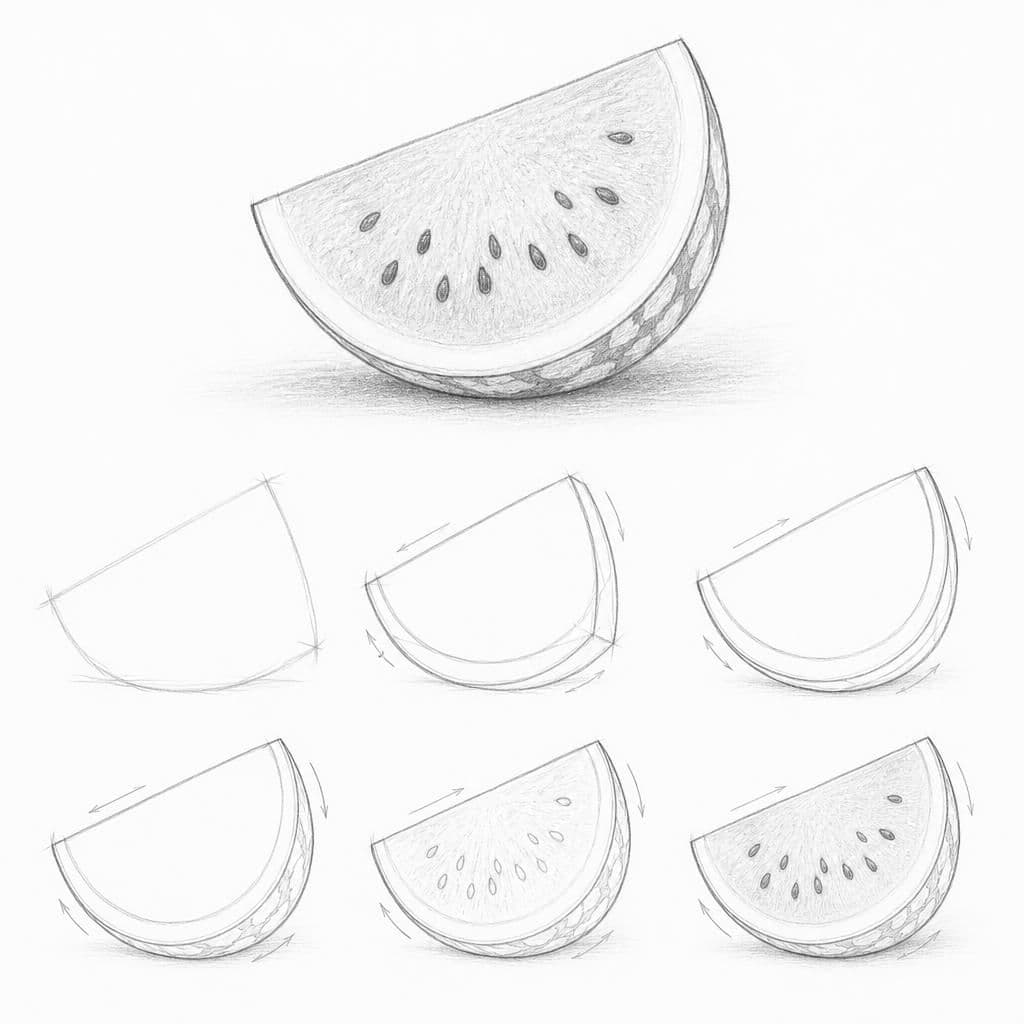
Step-by-step: how to draw watermelon slice
Place the watermelon slice on a table where you have a clear view.
Observe the outline of the entire slice before beginning to draw.
Start by drawing the outer contour, capturing the rounded edges of the rind.
Add details like the seeds and the dividing line between the rind and the flesh.
Before you start: what to look at
Look closely at the curve of the rind and the way it meets the red flesh. Notice the seeds' placement and the shadow they cast. Observe where the light hits the surface, especially on the glossy rind.
Pro tips for drawing watermelon slice
Common mistakes drawing watermelon slice
Self-evaluation checklist
Check if your sketch captures the unique curve of the slice and the placement of seeds. Ensure the transitions in texture between the rind and the flesh are visible.
Frequently asked questions
How can I draw the texture of the watermelon flesh?
Focus on using light lines and varying your pencil pressure to suggest the juicy texture. Highlighting and shading can also add depth.
What if my seeds look out of place?
Re-evaluate the spacing and size of the seeds. You might have to erase and reposition them to match the natural arrangement in your reference.
How do I make the rind look more realistic?
Pay attention to the light spots and the natural gradient of colors. Use shading to show the roundness and smoothness of the rind.
More drawing lessons



Get a new drawing lesson delivered to your inbox every morning, free.
Subscribe to Draw Daily →