What you'll learn
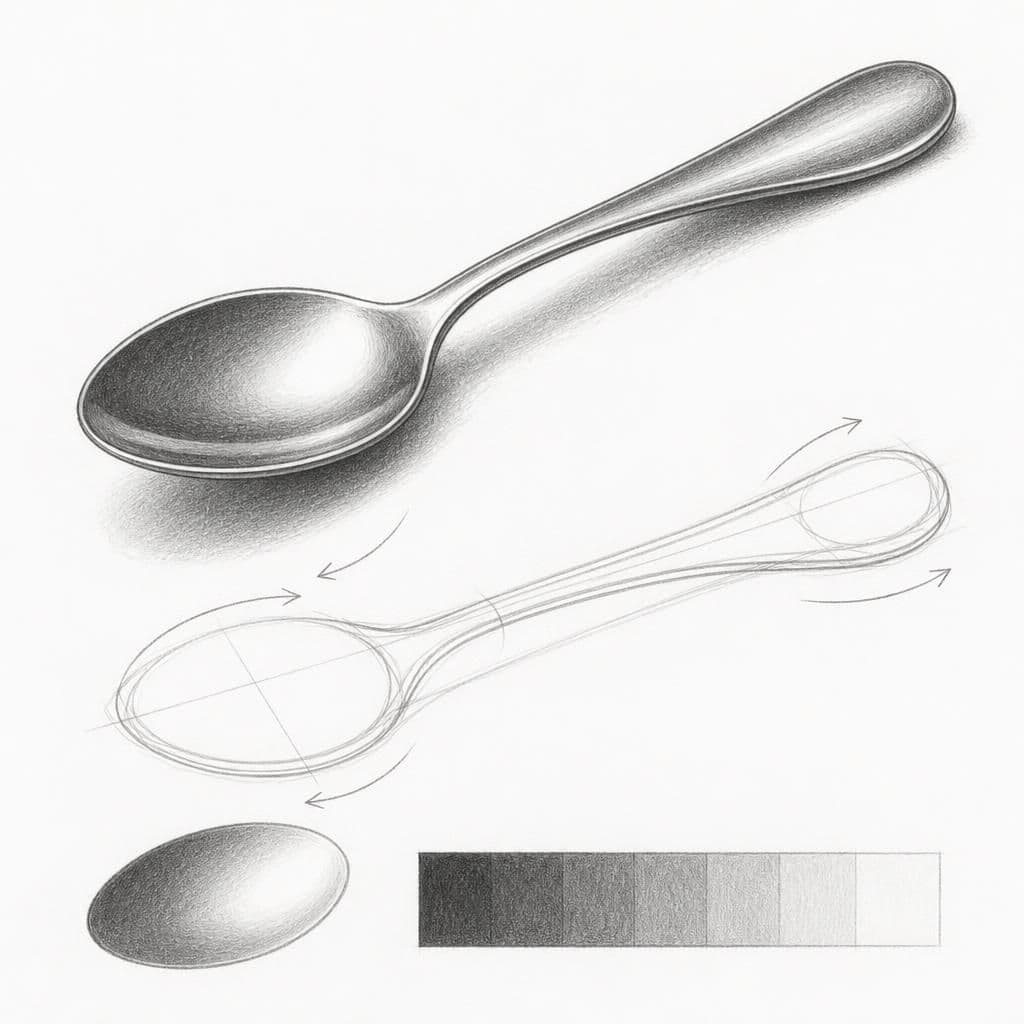
A metal spoon provides a simple shape to focus on shading and value. The reflective surface allows you to practice smooth gradients and recognize the effect of light direction and cast shadows.
What you'll need
Step-by-step: how to draw metal spoon
Place the spoon on a flat surface with a direct light source to one side.
Begin by sketching the outline of the spoon lightly with a pencil.
Observe the darkest areas where the shadow is cast and apply gentle pressure to shade them.
Gradually build up lighter shades by reducing pressure as you move towards areas of highlight.
Blend your shading using a blending stump or your finger to create smooth transitions between values.
Before you start: what to look at
Before drawing, notice the way the spoon narrows from the bowl to the handle. Observe the curve along the spoon's edge and the way light reflects off its surface, creating distinct areas of highlight and shadow. Pay special attention to how the light affects the curvature of the spoon's bowl and where the shadows are cast on the flat surface beneath it.
Pro tips for drawing metal spoon
Common mistakes drawing metal spoon
Self-evaluation checklist
Check if your sketch captures the contrast between light and dark areas. Ensure the shading is smooth and gradients are even, reflecting the spoon's reflective surface.
Frequently asked questions
Why does the spoon's surface appear to have different shades?
The spoon's reflective metal surface catches and reflects light at different angles. This creates various shades, with some areas appearing darker or lighter depending on the light source and the spoon's orientation.
How do I capture the spoon's reflective nature in my drawing?
Focus on the contrast between light and dark areas. Use varied pressure to create distinct highlights and shadows, and blend carefully to maintain a reflective appearance. Pay attention to the sharpness of edges where light transitions abruptly.
What should I consider when drawing the spoon's curve?
Observe the subtle changes in width and direction of the spoon's curve. Make sure the proportions remain consistent, particularly where the bowl meets the handle. Accurate curves will help convey the three-dimensional form of the spoon.
More drawing lessons
Get a new drawing lesson delivered to your inbox every morning, free.
Subscribe to Draw Daily →