What you'll learn
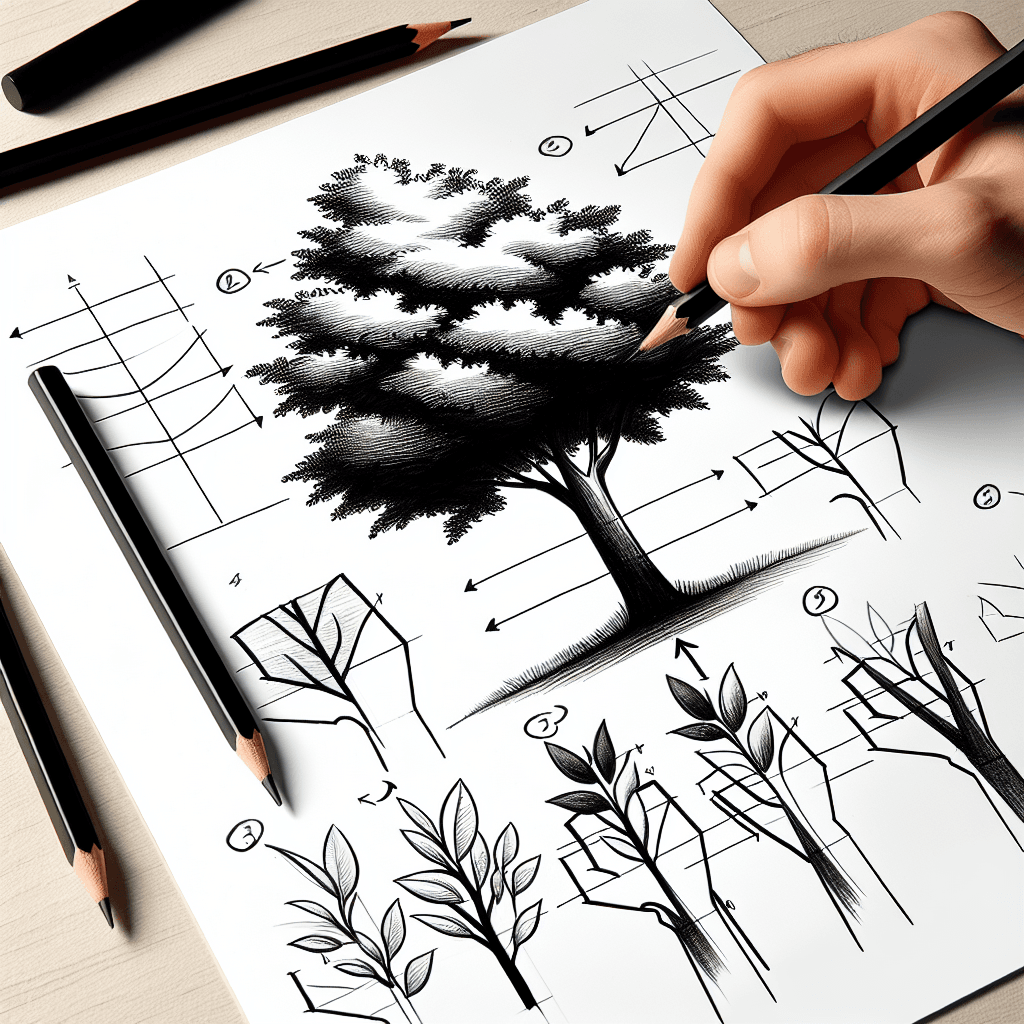
Shading helps create depth and dimension in your drawings. Practicing shading on a tree will teach you how light interacts with different surfaces and angles, enhancing your understanding of three-dimensional forms.
What you'll need
Step-by-step: how to draw tree with leaves
Sketch the outline of a tree trunk with branches.
Draw the foliage with basic leaf shapes.
Identify the light source and lightly shade the opposite side of the tree trunk.
Add shading to the leaves, focusing on creating depth by darkening areas further from the light.
Refine the shading by adding texture to the bark and detailing the leaves' edges.
Before you start: what to look at
Notice the way the trunk subtly tapers as it ascends and how branches emerge at various angles. Observe how light hits the upper surfaces of the leaves while the undersides remain in shadow. Pay attention to where shadows fall on the ground and how they connect to the tree's form.
Pro tips for drawing tree with leaves
Common mistakes drawing tree with leaves
Self-evaluation checklist
Assess the range of tones in your shading and how well they create a sense of depth and realism.
Frequently asked questions
How can I make the leaves look more natural without drawing every single one?
Focus on capturing clusters of leaves rather than individual ones. Use varied shading to suggest depth and density in the foliage, emphasizing where light and shadow naturally occur.
What’s the best way to draw realistic bark texture?
Use short, varied pencil strokes to mimic the texture of bark. Pay attention to the direction and flow of these lines, as bark patterns often follow the trunk's growth and movement.
How do I ensure the branches look like they are coming out of the trunk naturally?
Draw the branches so they blend smoothly with the trunk, observing how they taper and join. Start with faint lines to establish their position and refine them as you shade, maintaining consistency in their angle and thickness.
More drawing lessons





Get a new drawing lesson delivered to your inbox every morning, free.
Subscribe to Draw Daily →