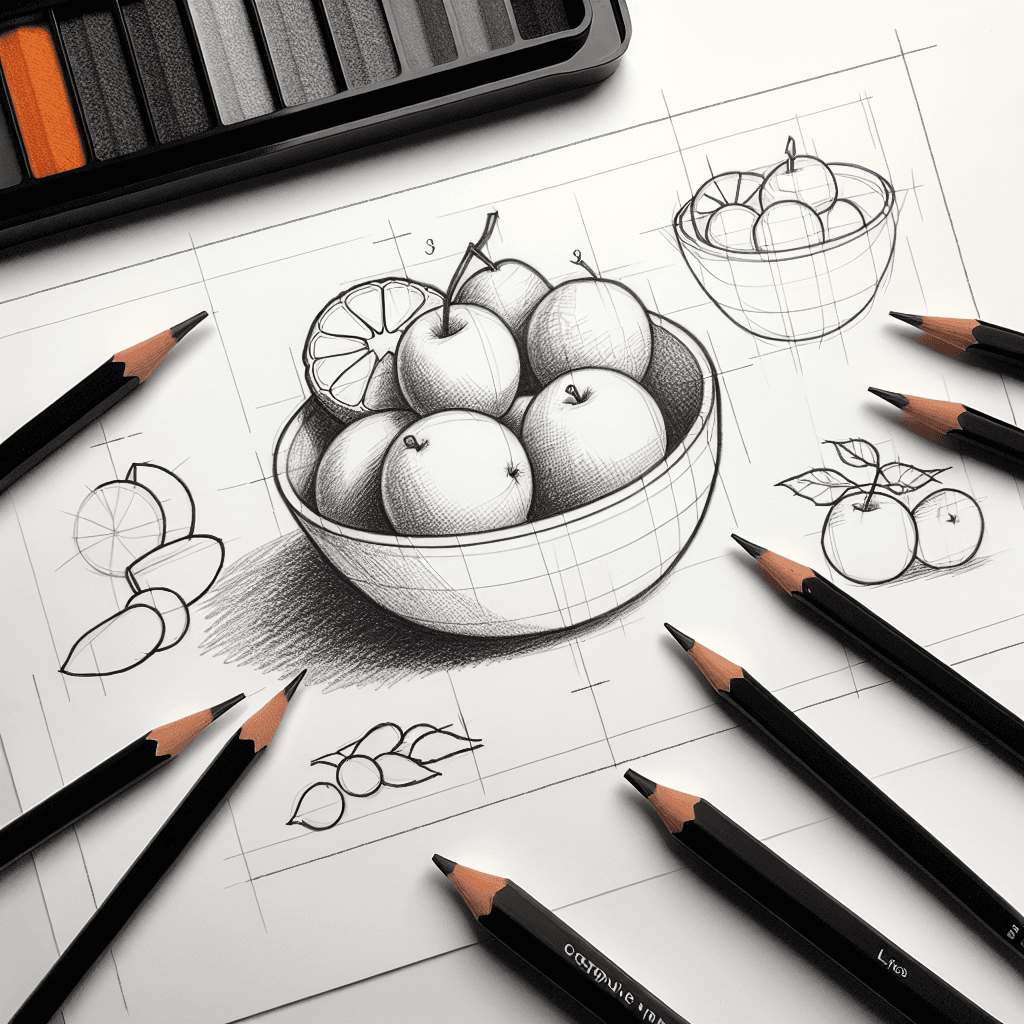
What you'll learn
Drawing a fruit bowl is an excellent way to practice basic shading techniques. The varying shapes and textures of the fruit help beginners understand how light and shadow interact with different surfaces.
What you'll need
Step-by-step: how to draw fruit bowl
Start by sketching simple outlines of different fruits, such as apples, oranges, and bananas, in a bowl.
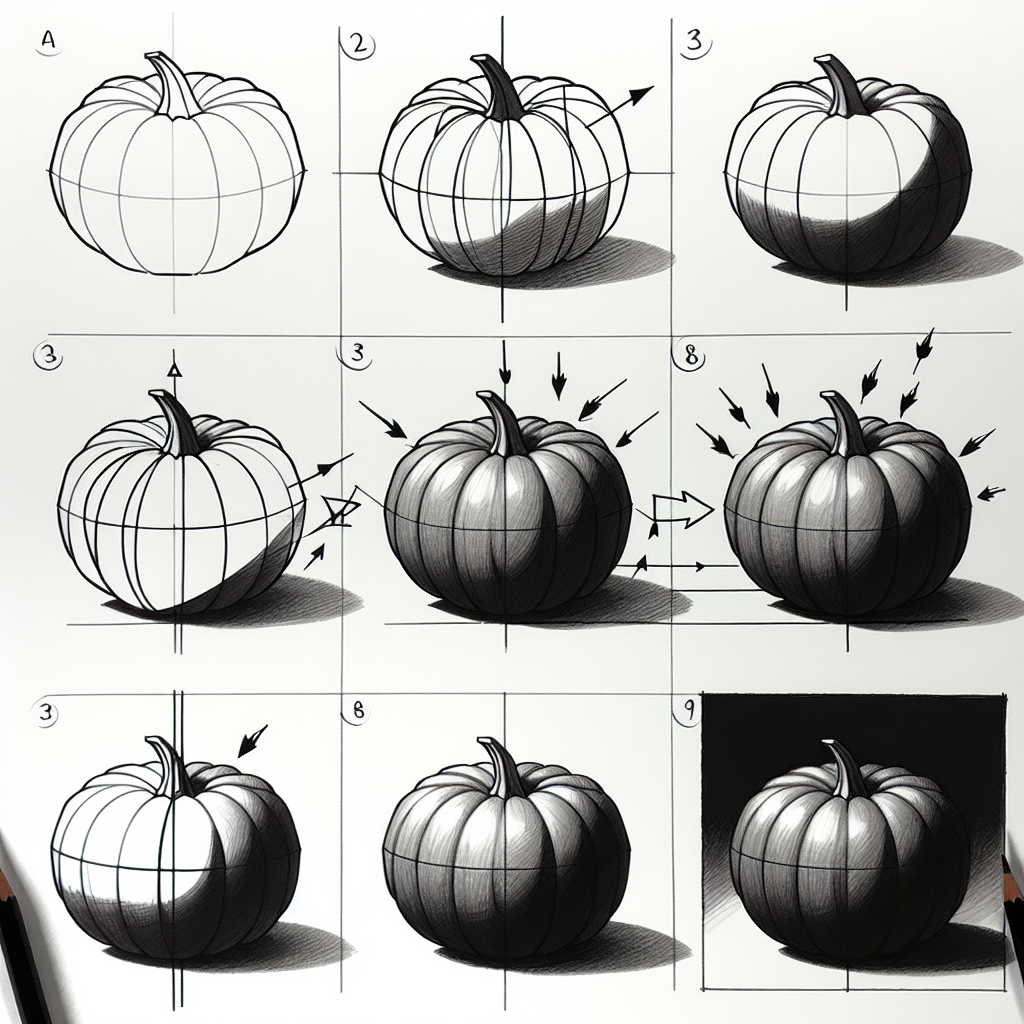
Identify the light source and lightly shade the opposite side of each fruit to indicate shadows.
Use an eraser to create highlights where the light hits each fruit surface.
Add more layers of shading to build depth, making sure to blend smoothly for a realistic effect.
Finish by adding details to the fruits, such as stems or texture, to enhance the drawing's realism.
Before you start: what to look at
Before drawing, observe how the light creates a gradient from light to dark on each fruit. Notice the distinct curve of the apple's edge against the bowl rim. Pay attention to where the light most strongly highlights the apple and banana.
Pro tips for drawing fruit bowl
Common mistakes drawing fruit bowl
Self-evaluation checklist
Evaluate the sketch by checking the contrast between light and shadow, the smoothness of the shading, and the accuracy of the fruit shapes.
Frequently asked questions
How do I make the apple look round and not flat?
Focus on the gradient of light to shadow across the apple's surface. Ensure the highlight is positioned based on the light source, and use smoother transitions between light and dark areas.
What's the best way to show the texture of the orange's skin?
Lightly stipple or use small circular motions with your pencil to mimic the texture of the orange peel. Vary the pressure to add depth and realism.
How do I position the fruit so they look naturally placed in the bowl?
Consider the overlapping of fruits and how they rest against the bowl and each other. Sketch a few light guidelines to ensure each fruit interacts naturally with its neighbors.
More drawing lessons
Get a new drawing lesson delivered to your inbox every morning, free.
Subscribe to Draw Daily →