What you'll learn
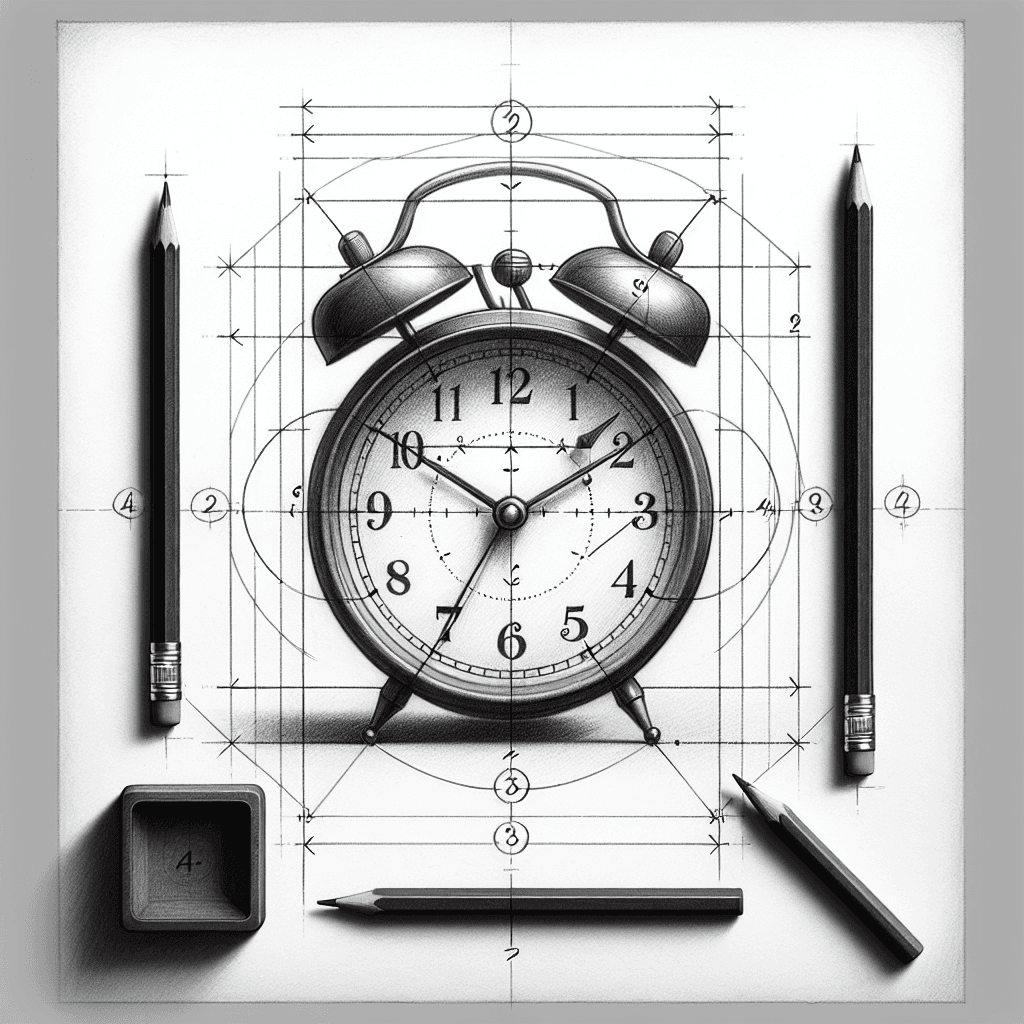
Drawing an alarm clock helps beginners understand how to use the rule of thirds to place the subject on the page effectively. It allows artists to experiment with focal points and balance within the composition, ensuring the clock's face and hands naturally draw the viewer's eye.
What you'll need
Step-by-step: how to draw alarm clock
Begin by lightly sketching a rectangular frame on your page to guide the placement of the alarm clock. Divide the frame into thirds horizontally and vertically.
Visualize the intersections of these lines and decide where you want the center of the clock face to be placed, aiming for one of the intersections.
Draw the main body of the clock, ensuring it fits nicely within the frame you’ve set up. Pay attention to how the rounded and flat parts of the clock interact with the guiding lines.
Add the clock’s face, hands, and numbers, placing them centrally within the clock's body while adhering to the rule of thirds for balance and interest.
Enhance your drawing with some light shading or details to emphasize the texture and depth of the clock, ensuring not to overshadow the simplicity of the composition.
Before you start: what to look at
Before drawing, examine the curvature where the clock face meets the frame: notice how it transitions smoothly from edge to edge. Observe the light reflections on the glass face, especially where it subtly distorts the numbers. Check the proportion of the bell or alarm mechanism atop the clock, comparing it to the overall height of the clock.
Pro tips for drawing alarm clock
Common mistakes drawing alarm clock
Self-evaluation checklist
Check if the clock is aligned according to the rule of thirds and if it draws the viewer's eye toward the intended focal points without any part of the sketch looking too empty or crowded.
Frequently asked questions
How do I accurately draw the circular shape of the clock's face?
Start by lightly sketching a circle using your pencil's side, rotating it within a fixed wrist angle to keep the shape consistent. Use a circular object, like a cup, as a guide if needed to ensure a perfect circle.
What is the best way to depict the metallic texture of the clock's bells?
Use light, varied pencil strokes to mimic the reflective surface. Focus on highlights where the light directly hits and subtle shading for shadowed areas, creating a metallic sheen effect.
How can I make sure the hands of the clock are proportional?
Observe and measure the length of the hour and minute hands against the radius of the clock face. Sketch these lightly initially to adjust easily. The minute hand is usually longer, reaching closer to the edge of the clock face, while the hour hand is shorter.
More drawing lessons

Get a new drawing lesson delivered to your inbox every morning, free.
Subscribe to Draw Daily →