What you'll learn
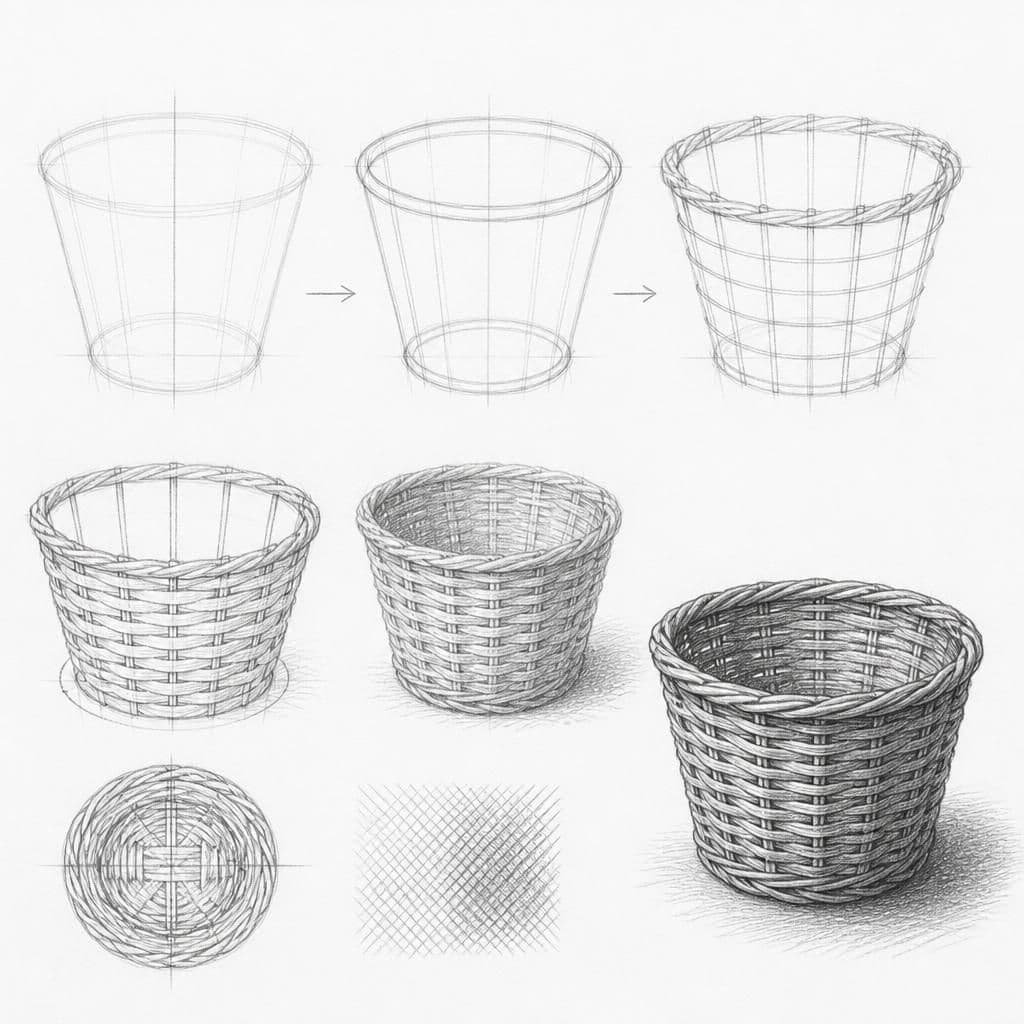
The woven pattern of a wicker basket presents a unique opportunity to practice rendering texture. It challenges you to capture the intricate interlacing and subtle shadows using cross-hatching techniques.
What you'll need
Step-by-step: how to draw wicker basket
Start by sketching the outline of the basket, focusing on the shape and proportion.
Identify the direction of the weave pattern and lightly pencil in the main lines.
Use cross-hatching to create the texture of the woven strands, paying attention to the varying depths and overlaps.
Add darker cross-hatch marks in areas that recede or are in shadow to emphasize texture.
Refine the individual strands by adding detail with lighter pencil strokes where needed.
Review your sketch for consistency in texture, adjusting cross-hatching to enhance the three-dimensional quality.
Before you start: what to look at
Notice where the basket's rim creates subtle shadows on the inside. Pay attention to the curvature of the basket and how the weave pattern angles as it spirals around. Look at how light highlights the tops of the weave in contrast to the shadows between the strands.
Pro tips for drawing wicker basket
Common mistakes drawing wicker basket
Self-evaluation checklist
Evaluate if the texture feels believable and three-dimensional. Check if the weave pattern is consistent and if the use of cross-hatching enhances depth and shadow.
Frequently asked questions
How do I capture the curved shape of the basket accurately?
Begin by lightly sketching the overall shape and contour of the basket. Use curved lines to reflect the roundness, and frequently step back to check the proportions against your reference.
What should I focus on to make the weave look realistic?
Concentrate on the overlaps and intersections of the strands. Pay close attention to where shadows naturally fall and use cross-hatching to mimic those shadows for a realistic effect.
How can I make the basket appear more three-dimensional?
Use varying pressure on your pencil to create lighter and darker areas. Enhance shadows where the weave dips and add highlights on raised areas to enhance the illusion of depth.
More drawing lessons
Get a new drawing lesson delivered to your inbox every morning, free.
Subscribe to Draw Daily →