What you'll learn
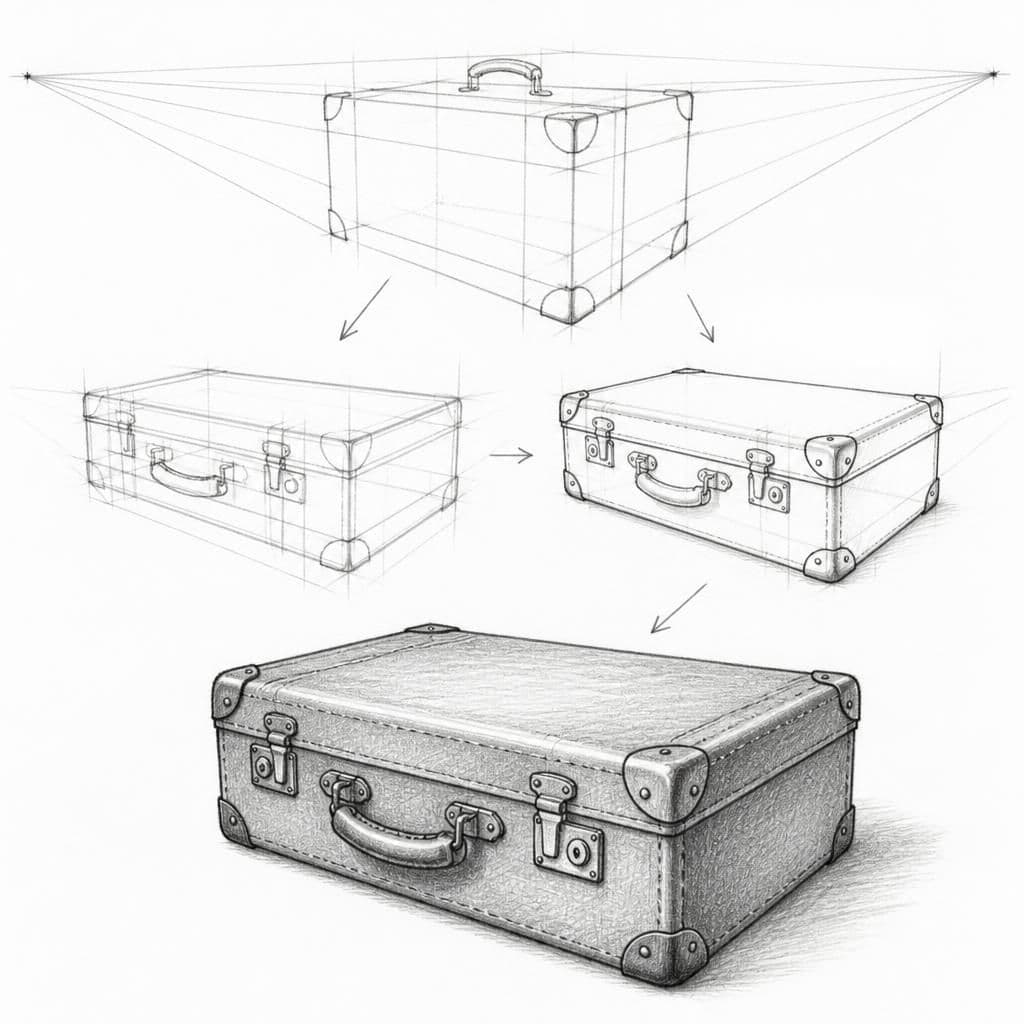
Drawing a vintage suitcase allows practice with two-point perspective due to its box-like shape and angled surfaces. It's a great exercise for visualizing vanishing points and understanding how lines converge on the horizon.
What you'll need
Step-by-step: how to draw vintage suitcase
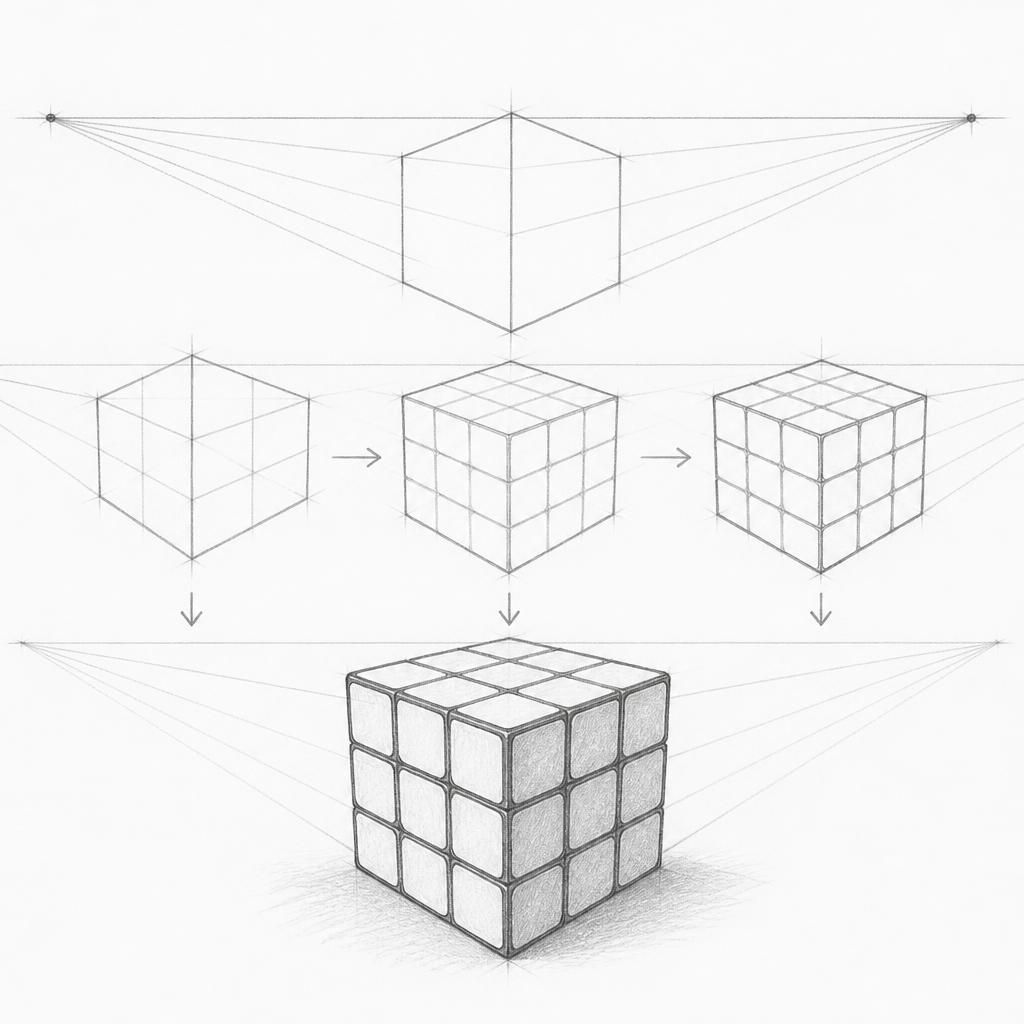
Start by lightly sketching the horizon line and two vanishing points far apart.
Draw the suitcase's front face, using vertical and horizontal lines.
Connect the corners of the front face to the vanishing points to outline the basic shape.
Add details like handles, latches, and decorative elements, ensuring lines align to the perspective.
Refine your sketch with shading to emphasize the suitcase's form and texture.
Before you start: what to look at
Look at how the suitcase's corners create an illusion of depth, observe how the top and side edges angle towards vanishing points. Notice details like grooves, seams, and where light casts shadows.
Pro tips for drawing vintage suitcase
Common mistakes drawing vintage suitcase
Self-evaluation checklist
Check if all lines converge consistently towards their vanishing points and if the proportions remain believable. Ensure details like handles and latches follow the perspective lines.
Frequently asked questions
How do I choose where to place my vanishing points?
The vanishing points should be far apart to allow a realistic convergence of lines. If you're working on a small paper, place them near the edges to maintain perspective.
What should I focus on when adding details like latches and handles?
Ensure these elements follow the established perspective lines. Draw them lightly at first to adjust their angles and placement for accuracy.
How can I ensure my shading enhances the perspective?
Use shading to emphasize depth and form. Shade areas further from the light source more heavily to enhance the three-dimensional look.
More drawing lessons

Get a new drawing lesson delivered to your inbox every morning, free.
Subscribe to Draw Daily →