What you'll learn
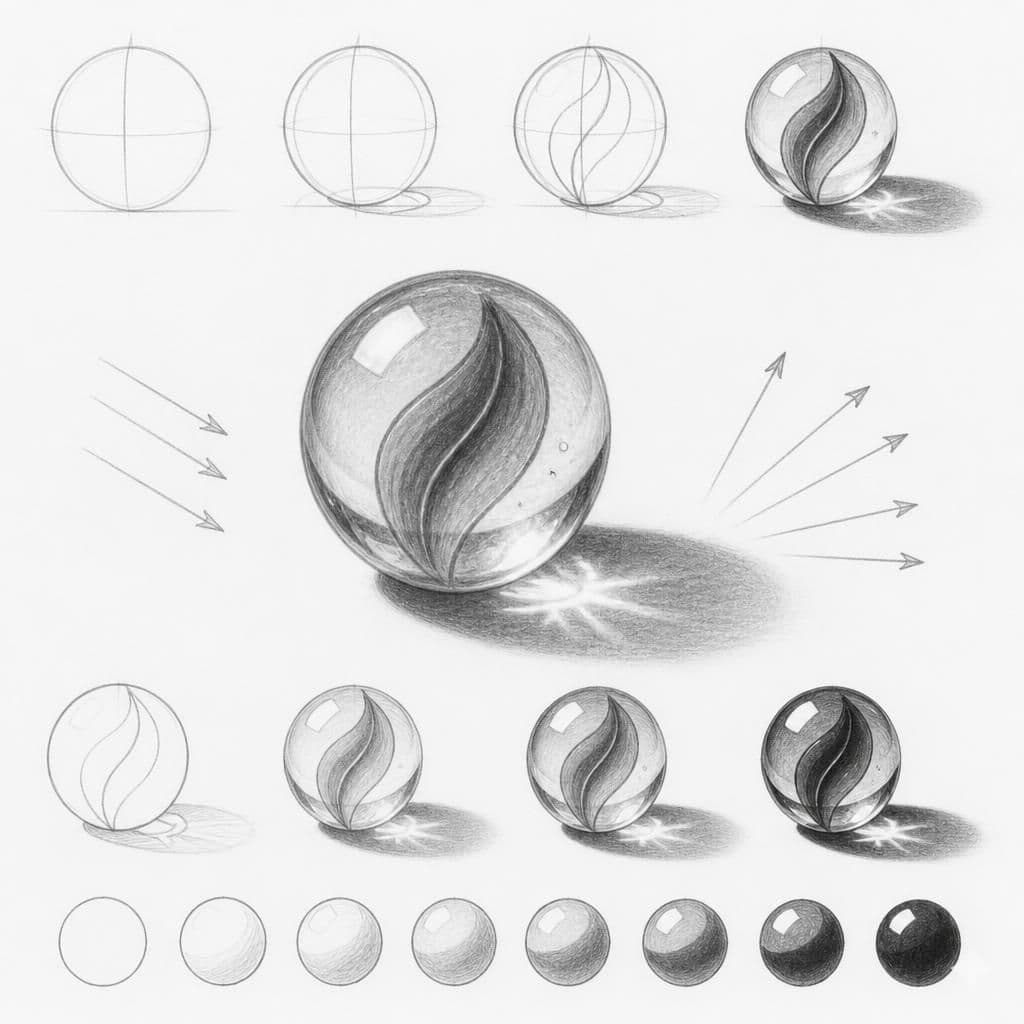
Drawing a glass marble helps beginners understand light reflection and transparency. Observing how light interacts with the marble's surface and internal features sharpens perception skills.
What you'll need
Step-by-step: how to draw glass marble
Place the glass marble on a flat surface with good natural or artificial light.
Spend a couple of minutes observing the marble, noting highlights, shadows, and reflections.
Lightly sketch the basic outline of the marble, focusing on its roundness.
Add the reflections and highlights you see, using gentle shading to emphasize depth.
Review and adjust the shading and reflections to improve the marble's three-dimensional effect.
Before you start: what to look at
Look closely at where the light hits the marble and how it creates bright spots. Notice the curvature of the marble and how it distorts objects seen through it. Pay attention to any subtle color variations in the glass.
Pro tips for drawing glass marble
Common mistakes drawing glass marble
Self-evaluation checklist
Compare your sketch to the marble, checking if the reflections and highlights match the source. Ensure the roundness and proportions are accurate, and the transparency effect is evident.
Frequently asked questions
How do I make the marble look transparent?
Focus on the highlights and leave certain areas of the marble lightly shaded. This creates the illusion of transparency.
Why does my marble look flat?
Check if you've captured the highlights and reflected surfaces correctly. These elements add depth and roundness to your drawing.
How do I capture the colors inside the marble?
Observe any subtle color variations and use light shading to suggest them. Don't overemphasize colors; keep it subtle to maintain a realistic look.
More drawing lessons

Get a new drawing lesson delivered to your inbox every morning, free.
Subscribe to Draw Daily →