What you'll learn
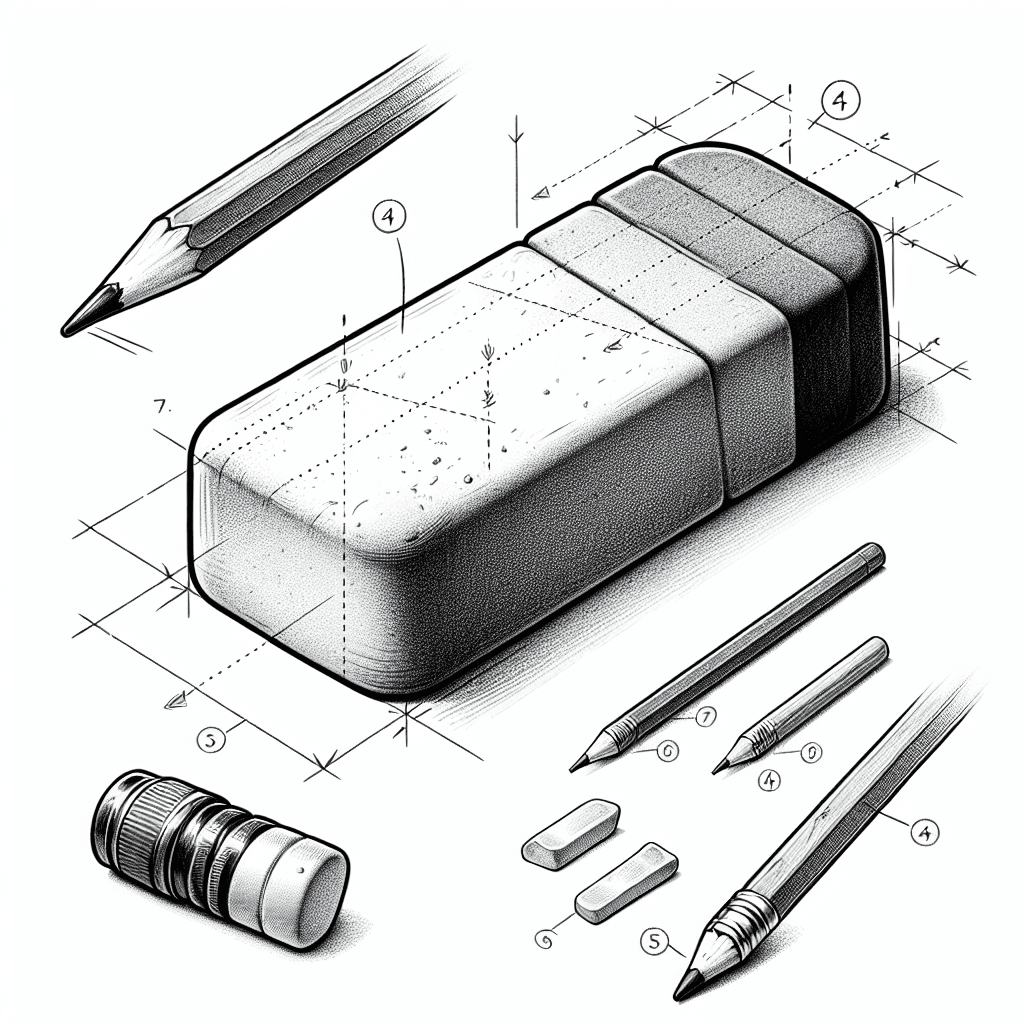
Drawing a rubber eraser helps beginners focus on capturing basic shapes and contours with minimal detail, allowing for the practice of proportion and spatial relationships.
What you'll need
Step-by-step: how to draw rubber eraser
Begin by closely observing the eraser, noting its shape and the way light hits its surface.
Lightly sketch the outer contour of the eraser without focusing on internal details.
Observe any unique features such as edges or corners and refine the contour lines to capture these.
Focus on shading to imply volume; use soft lines to indicate areas of light and shadow.
Review the sketch and make adjustments where the proportional relationships differ from your observation.
Before you start: what to look at
Pay attention to the corners of the eraser and how they may be slightly rounded from use. Observe the way light creates a highlight on the top surface, with shadows forming along the sides. Note the proportion of the eraser's length compared to its width and height.
Pro tips for drawing rubber eraser
Common mistakes drawing rubber eraser
Self-evaluation checklist
Compare your drawing to the eraser, checking if the contours and proportions match. Ensure the shading reflects the light source accurately.
Frequently asked questions
How do I capture the smooth surface of a rubber eraser?
Use light, even shading and blend softly to suggest the smoothness of the rubber. Pay attention to the areas where light hits most directly as these should remain lighter.
What is the best way to draw the edges and corners of an eraser?
Observe the eraser's corners closely; they may not be perfectly sharp. Sketch gently rounded lines if needed, and refine them to match the specific wear on your eraser.
How can I accurately represent the proportions of a rubber eraser?
Measure the length, width, and height relative to one another. Use these measurements to guide your initial contour sketch, ensuring each side reflects the observed proportions.
More drawing lessons
Get a new drawing lesson delivered to your inbox every morning, free.
Subscribe to Draw Daily →