What you'll learn
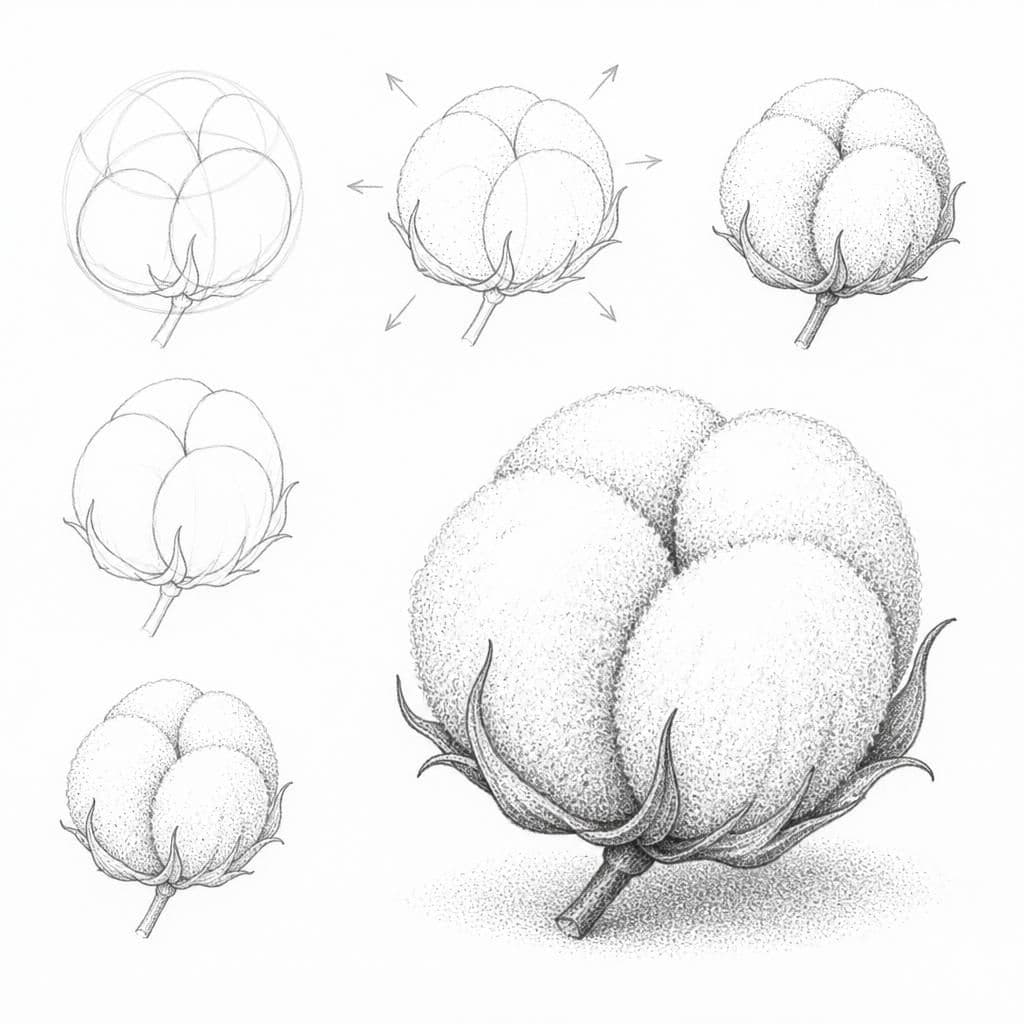
A cotton ball presents a unique opportunity to explore soft and fluffy textures. Its uneven, fibrous surface offers a challenge in capturing light and shadow through texture rendering.
What you'll need
Step-by-step: how to draw cotton ball
Begin by sketching a simple oval shape to represent the basic form of the cotton ball.
Lightly outline the fluffy edges using short, curved lines to suggest the texture of the fibers.
Use stippling (small dots) to create shadowed areas, focusing on varying the density to show depth.
Add more stippling and short lines to build up the texture, especially where the cotton appears denser.
Refine the edges and adjust the stippling to balance the light and shadow, paying attention to subtle variations in the surface.
Before you start: what to look at
Examine where the light naturally hits the cotton ball, noticing the areas that appear brightest. Observe the edges where fibers fluff out unevenly, creating variations in texture. Pay attention to shadowed areas that create depth and accentuate its volume.
Pro tips for drawing cotton ball
Common mistakes drawing cotton ball
Self-evaluation checklist
Check if the texture captures the softness and fluffiness of a real cotton ball, with clear contrasts between light and shadow.
Frequently asked questions
How do I capture the softness of the cotton ball?
Focus on using light, short strokes and stippling to suggest the fluffy texture. Avoid pressing hard with your pencil to maintain soft lines and transitions.
What is the best way to show depth in a cotton ball?
Vary the density of your stippling: denser dots in shadowed areas create a sense of depth, while lighter stippling indicates areas more exposed to light.
How should I approach drawing the fibers on the edges?
Use short, curved lines and vary their length and direction. This irregularity mimics the way cotton fibers fluff out, making the edges appear more realistic.
More drawing lessons

Get a new drawing lesson delivered to your inbox every morning, free.
Subscribe to Draw Daily →