What you'll learn
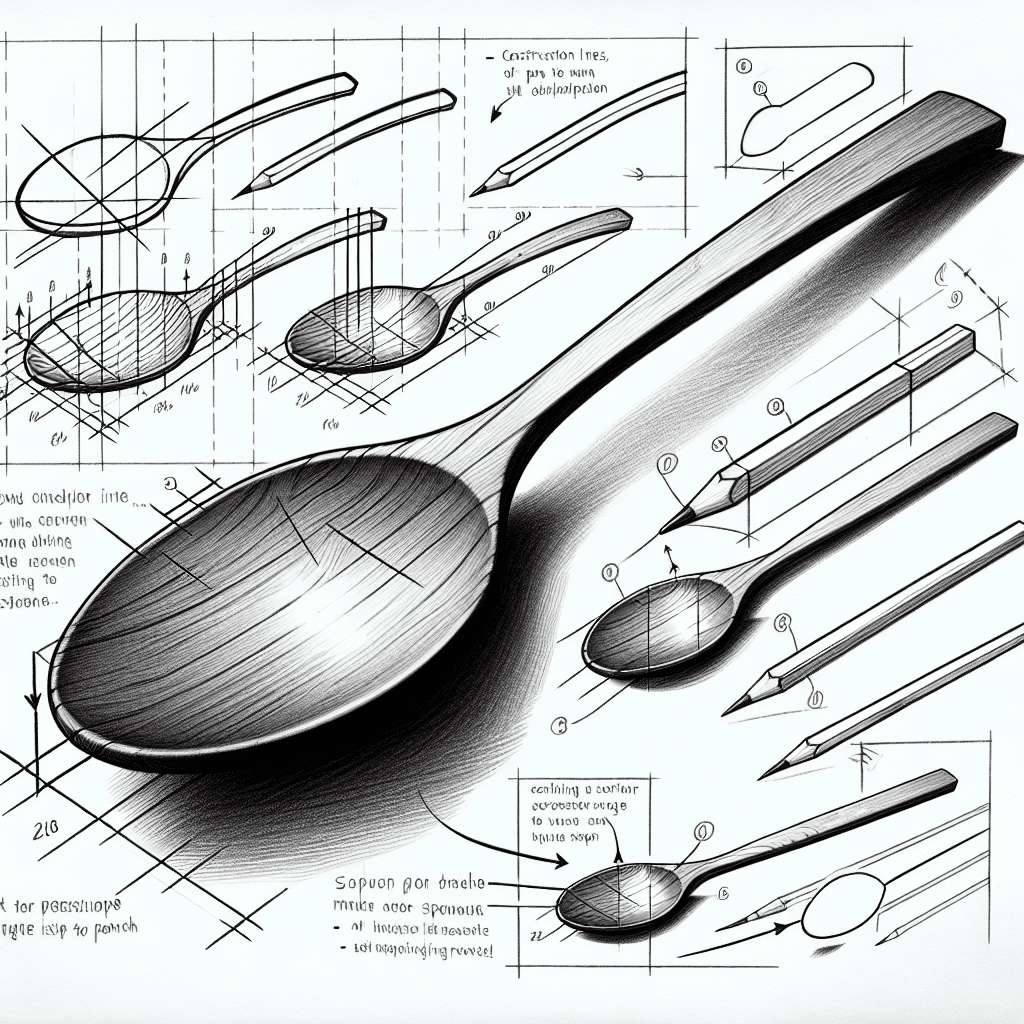
A wooden spoon offers a variety of textures from the smooth surface of the bowl to the grainy handle, making it a great subject for practicing texture. Hatching techniques will help depict the wood grain realistically.
What you'll need
Step-by-step: how to draw wooden spoon
Start by lightly sketching the basic shape of the wooden spoon, focusing on proportions.
Identify the areas where light and shadow fall, marking them lightly.
Using hatching, begin to render the grain pattern on the handle, varying line weight and spacing to show texture.
Move to the bowl of the spoon, using finer hatching lines to depict the smoother surface.
Refine shadows and highlights by adjusting line density, enhancing the overall three-dimensional effect.
Before you start: what to look at
Examine where the spoon handle meets the bowl, noting the subtle curve and how it tapers. Observe the way the light reflects off the bowl, creating highlights, especially on the rounded edge. Pay attention to the wood grain direction and any visible texture differences between the handle and bowl.
Pro tips for drawing wooden spoon
Common mistakes drawing wooden spoon
Self-evaluation checklist
Assess if the wood grain pattern is convincing by checking if the texture suggests both the grain direction and surface unevenness. The spoon's form should appear three-dimensional and consistent with the light source.
Frequently asked questions
How do I make the bowl of the spoon look smooth compared to the handle?
Use finer and closer hatching lines for the bowl to suggest a smoother texture. Pay attention to subtle changes in light and shadow that help highlight its curvature and smoothness.
Why does my wooden spoon look flat even with texture?
Check if your shadows and highlights are consistent with the light source. Adjust line density in shadowed areas to add depth and ensure the light areas have softer transitions to suggest a three-dimensional form.
How can I accurately depict the wood grain on the handle?
Observe the grain pattern closely and use varied line weights to mimic the grain’s natural flow and irregularities. Ensure lines are not too uniform and follow the natural direction of the wood grain.
More drawing lessons
Get a new drawing lesson delivered to your inbox every morning, free.
Subscribe to Draw Daily →