What you'll learn
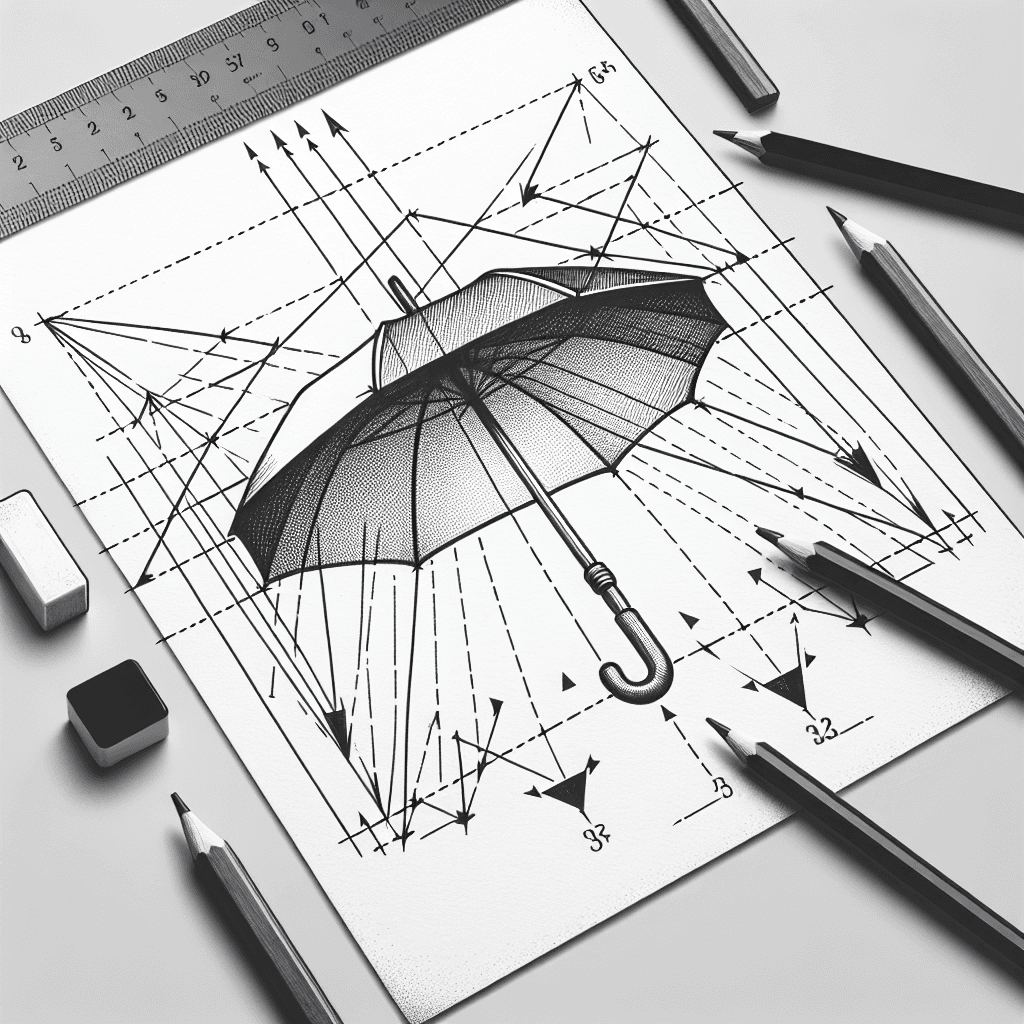
Drawing an umbrella helps you understand perspective and proportion as you capture its curved lines and segments. The challenge is to maintain symmetry and proportionate parts, such as the handle and the canopy.
What you'll need
Step-by-step: how to draw umbrella
Sketch the main shaft of the umbrella as a straight line.
Draw the canopy using a half-circle arc that connects to the shaft.
Add ribs to the canopy by drawing evenly spaced lines from the top of the shaft to the edges of the canopy.
Sketch the handle as a curved line extending from the bottom of the shaft.
Refine the details, adding the fabric folds and shading for depth.
Before you start: what to look at
Examine how the canopy curves symmetrically from the shaft and notice where the ribs meet the edges at regular intervals. Observe where light hits the fabric to create highlights and shadows. Pay attention to the proportion between the length of the shaft and the size of the canopy.
Pro tips for drawing umbrella
Common mistakes drawing umbrella
Self-evaluation checklist
Check if the umbrella's ribs are proportional and evenly spaced. Ensure the canopy appears symmetrical and the handle is accurately depicted.
Frequently asked questions
How do I ensure the ribs are evenly spaced?
Start by lightly marking the midpoint and quarter points along the canopy's edge. Use these as guides to draw ribs that are evenly spaced from top to bottom.
What's the best way to capture the umbrella's fabric texture?
Focus on shading to suggest the fabric's folds and depth. Lightly sketch the lines where fabric might gather or wrinkle, enhancing them with shadows to create a realistic texture.
How do I draw the handle so it looks attached naturally?
Ensure the handle aligns straight with the shaft. Begin by sketching a gentle curve from the shaft, maintaining consistent thickness, and refine it to appear as an extension rather than a separate piece.
More drawing lessons

Get a new drawing lesson delivered to your inbox every morning, free.
Subscribe to Draw Daily →