What you'll learn
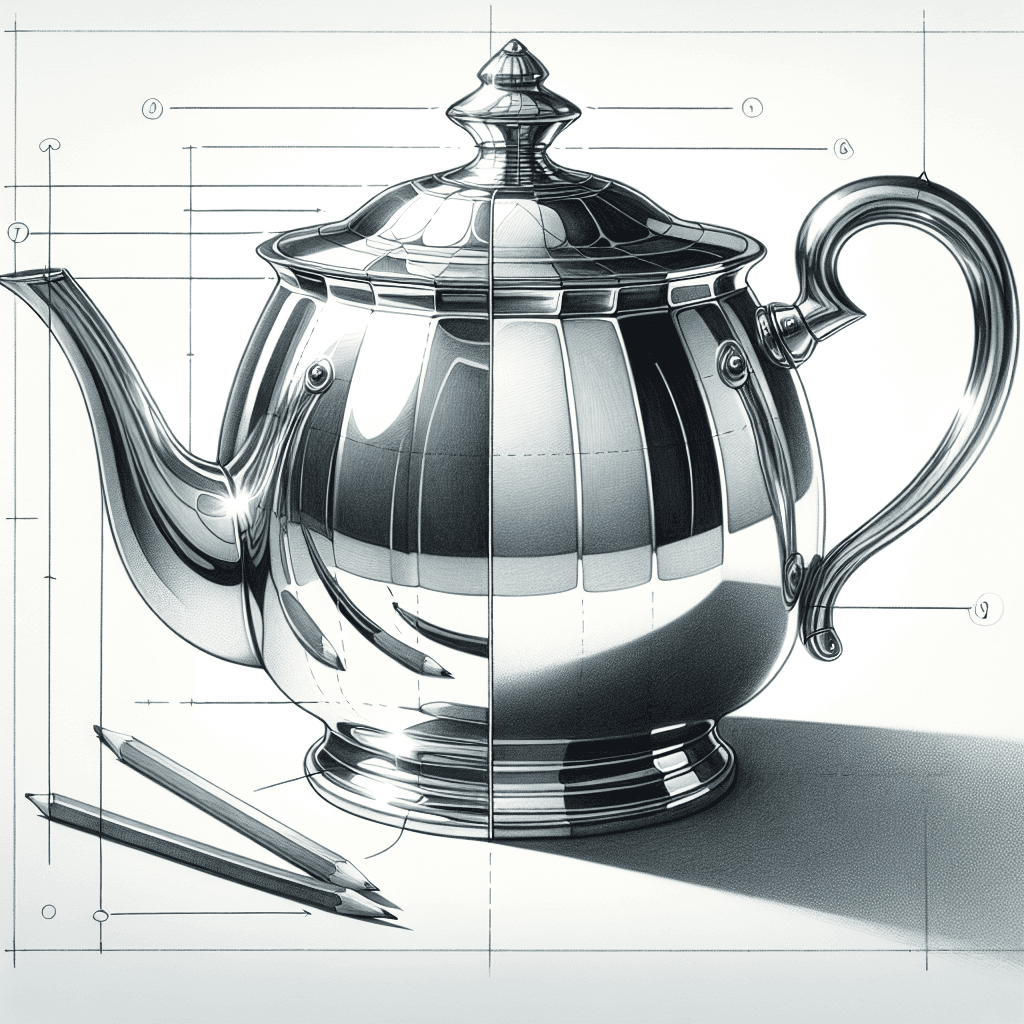
A silver teapot presents a complex interplay of light and reflections, offering an advanced challenge in accurately rendering both light direction and the subtleties of cast shadows. Mastering this will enhance an artist's ability to depict materials and surfaces realistically.
What you'll need
Step-by-step: how to draw silver teapot
Begin by sketching the basic outline of the teapot, focusing on its proportions and overall shape.
Identify the light source and lightly map out the areas of highlight and shadow on the teapot.
Using a soft pencil, start shading the darkest areas, paying attention to the core shadows and the reflective surfaces.
Blend the graphite gently, using a blending stump or finger, to achieve smooth transitions between light and shadow.
Add final touches by refining the highlights with an eraser to enhance the reflective quality of the silver surface.
Before you start: what to look at
Pay close attention to the way light hits the teapot's spout and handle, as these areas often have the most pronounced highlights. Notice the subtle curve of the body and how it affects the distribution of light. Observe where the teapot's surface reflects surrounding objects, which will help in creating a realistic portrayal.
Pro tips for drawing silver teapot
Common mistakes drawing silver teapot
Self-evaluation checklist
Evaluate whether the teapot's reflective surfaces are convincingly rendered, with smooth transitions between light and dark areas, and if the highlights are crisp and effectively placed to suggest a metallic surface.
Frequently asked questions
How do I handle the reflections on the teapot's surface?
Carefully observe what the teapot reflects and lightly sketch these elements first. Pay attention to the shapes and tones they create, and integrate them into your shading process for a realistic effect.
What should I do if my shading doesn't look smooth?
Use a blending stump or soft cloth to gently smooth out the transitions between light and shadow. If needed, reapply graphite in areas that need more depth and blend again until the transitions appear seamless.
Why does my teapot look lopsided despite careful outlining?
Recheck the symmetry of the teapot, especially around the lid, spout and handle. Ensure that both sides are balanced by measuring distances and angles accurately before finalizing your lines.
More drawing lessons
Get a new drawing lesson delivered to your inbox every morning, free.
Subscribe to Draw Daily →