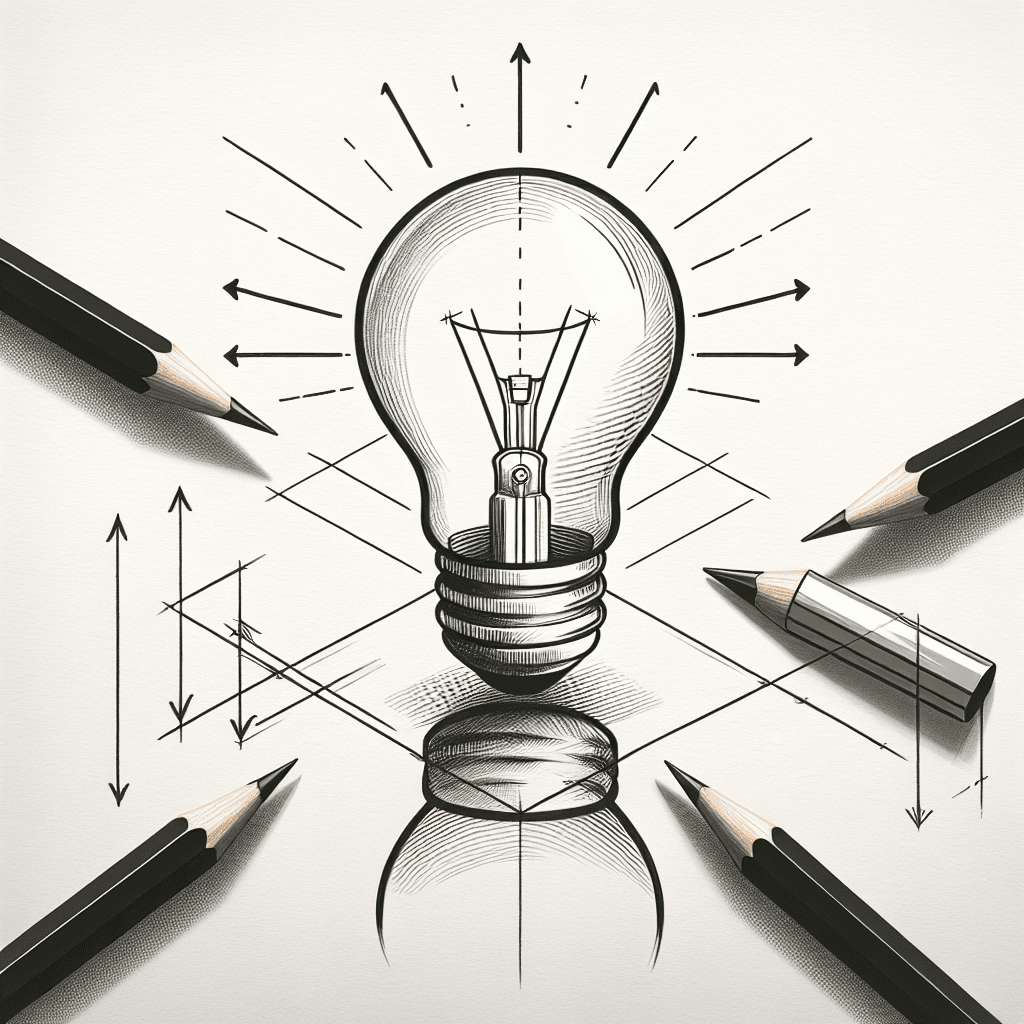
What you'll learn
Drawing a light bulb helps you practice capturing reflections and specular highlights, as it has a smooth, shiny surface. This practice will improve your ability to render reflective objects realistically.
What you'll need
Step-by-step: how to draw light bulb
Start by sketching the basic shape of the bulb, focusing on the symmetry.
Outline the metal base and ensure it aligns with the bulb's shape.
Lightly shade the glass body, identifying the areas where light reflects.
Add detail to the metal base, illustrating its texture and lines.
Emphasize the reflections and highlights on the glass to create a realistic effect.
Before you start: what to look at
Observe the distinct curve where the glass meets the metal base and notice how light creates a distinct line along this intersection. Pay attention to the bulb's symmetry by comparing the curvature on both sides. Look at how the light source creates bright highlights and softer reflections on the bulb's surface.
Pro tips for drawing light bulb
Common mistakes drawing light bulb
Self-evaluation checklist
Check if the reflections and highlights capture the light source accurately. Ensure the bulb looks symmetrical and the glass appears translucent and reflective.
Frequently asked questions
Why is the symmetry of the light bulb important?
Symmetry is crucial because it ensures the bulb looks balanced and realistic. A light bulb is typically uniform in shape, and capturing this symmetry will make your drawing more convincing.
How can I make the glass of the bulb look transparent?
To create a transparent effect, use light shading and focus on highlights. Identify where the light source hits the bulb, and keep those areas bright while gradually shading away from them to suggest depth and transparency.
What is the best way to capture reflections on the light bulb?
To capture reflections, observe where the light source hits and creates bright spots. Use sharp, defined lines for specular highlights and softer edges for subtler reflections to mimic how light interacts with the bulb's surface.
More drawing lessons
Get a new drawing lesson delivered to your inbox every morning, free.
Subscribe to Draw Daily →