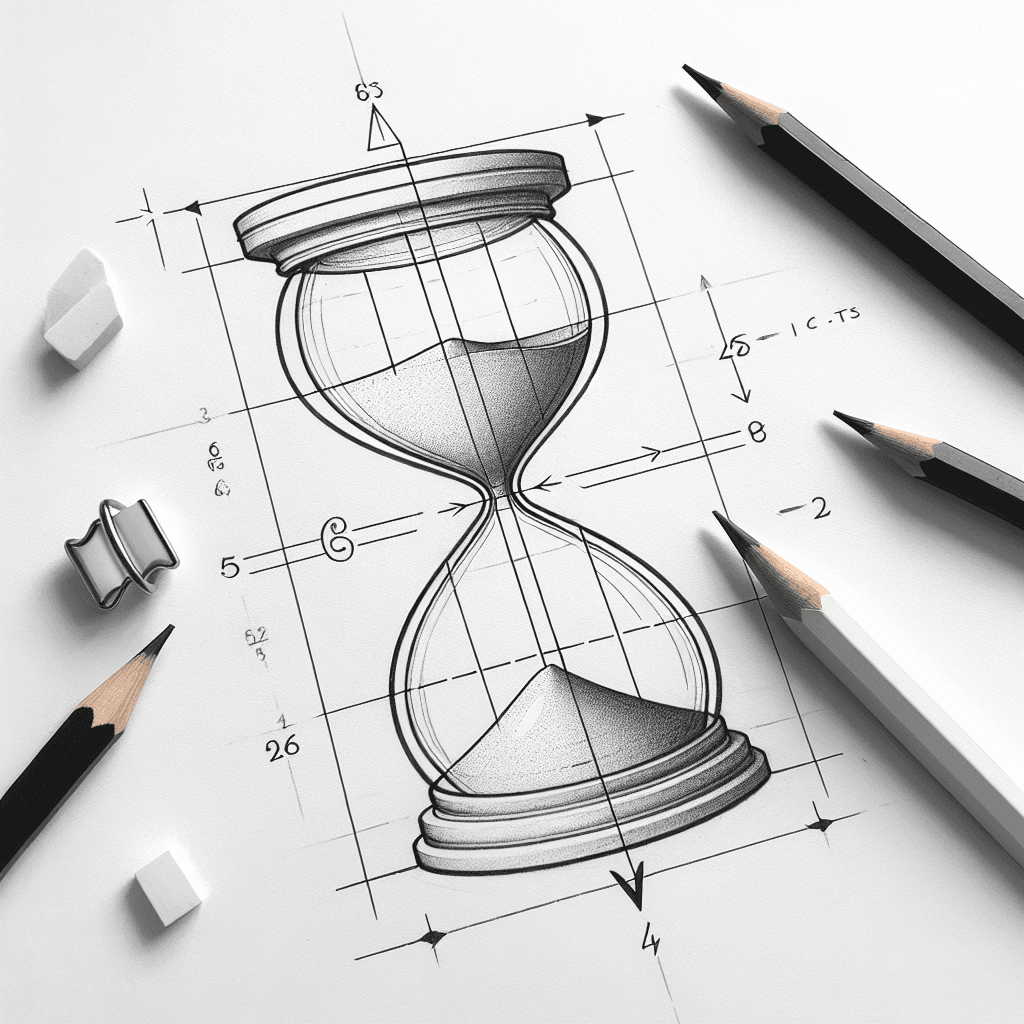
What you'll learn
The hourglass provides an advanced opportunity to explore its symmetrical form while utilizing the Rule of Thirds to create dynamic compositions. Its transparent nature and intricate interior elements challenge the artist to balance negative space with detailed focus regions.
What you'll need
Step-by-step: how to draw hourglass
Begin by sketching the basic outline of an hourglass in 1-2 minutes, focusing on its symmetry.
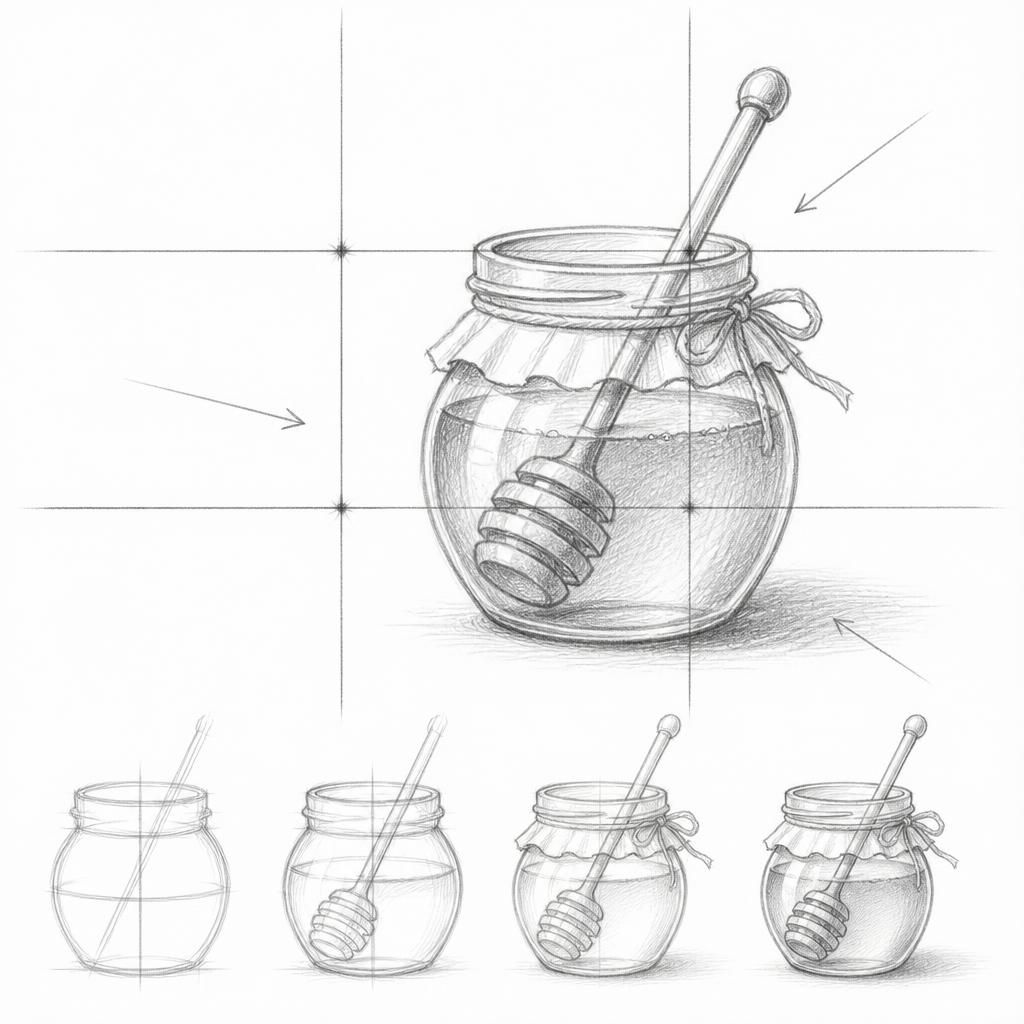
Consider the Rule of Thirds and adjust the position of the hourglass within your frame to create a balanced composition.
In 4-5 minutes, add details to the sand within the hourglass, emphasizing the flow and movement.
Focus on the glass structure, capturing reflections and refractions within another 4-5 minutes.
In the last 2-3 minutes, refine the overall sketch, adjusting contrasts and ensuring the composition leads the viewer's eye.
Before you start: what to look at
Observe the curve where the glass narrows; this is crucial for maintaining symmetry. Notice how light reflects off the rounded edges, creating highlights. Pay attention to the proportion of sand to empty space, as this affects the balance of the composition.
Pro tips for drawing hourglass
Common mistakes drawing hourglass
Self-evaluation checklist
Evaluate the composition by checking if the hourglass naturally draws the eye along the Rule of Thirds grid. Ensure that the negative space complements the subject and that the details within the hourglass are balanced with its overall form.
Frequently asked questions
How can I effectively capture the transparency of the glass?
Focus on the edges where light creates highlights. Use subtle shading to suggest transparency and reflections, avoiding heavy outlines that can make the glass look solid.
What is the best way to illustrate the sand's movement?
Convey movement by varying the density of your lines. Use lighter lines for airborne sand grains and darker shading where sand collects at the bottom.
How do I maintain symmetry in my drawing?
Continuously compare the left and right sides of the hourglass. Begin with a light central guideline to help keep the structure balanced as you add details.
More drawing lessons

Get a new drawing lesson delivered to your inbox every morning, free.
Subscribe to Draw Daily →